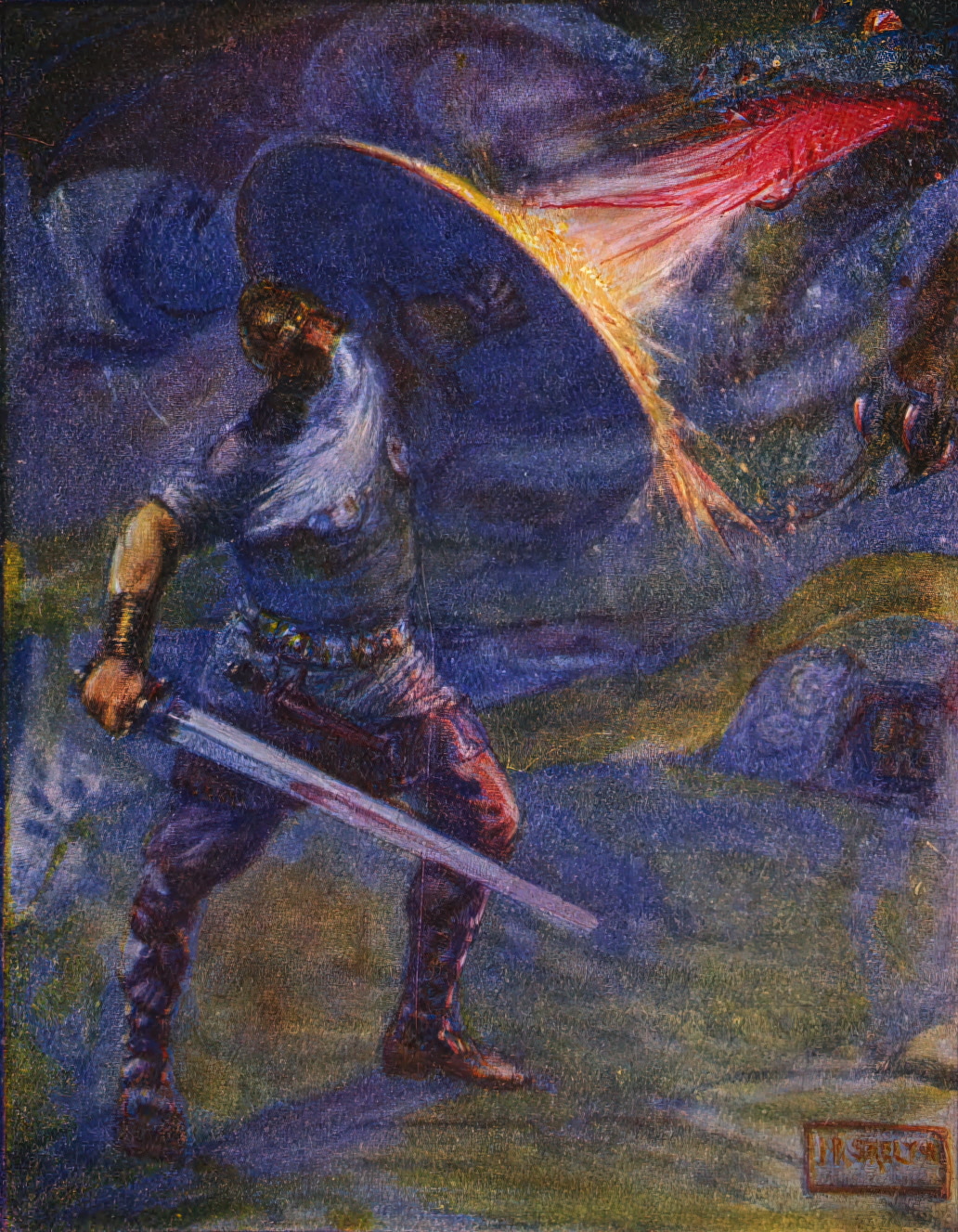
Beowulf and Its Themes by Jonathan L., 10th Grade
The epic poem Beowulf explores various themes, including sacrifice, heroism, pride, and the struggle between good and evil, exemplified by the conflict between Beowulf and Grendel.
Moral Lessons:
Beowulf embodies several virtues, such as:
- Bravery: Beowulf demonstrates bravery by fighting Grendel to protect others.
- Loyalty: He shows his loyalty to Hrothgar by agreeing to kill Grendel.
- Good and Evil: Beowulf represents goodness, while Grendel embodies evil, illustrating the battle between the two.
Subject Parallels:
The ongoing struggle against darkness in the story reflects Christian concepts of sin and redemption. Just as we need Jesus to save us from our sins—no one can save themselves—the battles in Beowulf can be viewed as metaphors for the spiritual warfare Christians believe they face against sin. While we all strive to do good, the Bible reminds us that "no one is good except the Father alone." In this light, I see Beowulf as a Christ figure, with Grendel representing the demons. Ultimately, Jesus will defeat sin, the devil, and demons forever.
Literary Analysis:
The text employs symbolism and allegory, and its profound reflections on death enhance our spiritual and literary understanding of myths. It's important to note that "myth" does not imply falsehood; rather, it refers to the stories that precede the creation of man.
Leadership:
The poem emphasizes the importance of community, kinship, and wise leadership. Beowulf is portrayed as a leader whom everyone relies on, aligning with Christian principles of fellowship and stewardship among friends.
Conclusion:
Engaging with Beowulf through a Christian lens can deepen our understanding of both myths and our own beliefs.

.jpg)


No comments:
Post a Comment
Note: Only a member of this blog may post a comment.