Are You Brave Enough?
by John G., 12th Grade Student
What is bravery? Bravery isn’t something you're born with, nor is it a skill that can be developed over time. It’s a spur-of-the-moment decision—an attribute that, whether or not in your own best interest, has the power to elevate you to greater heights. Bravery can be seen anywhere, in anyone. It might be the spontaneous decision to start a conversation with a stranger, or it could be a soldier fighting on the front lines. Either way, bravery comes from the heart. It stems from a passion to serve and to live freely. Bravery is the initiative to take action when no one else can, no matter who you are. Whether you’re a firefighter, an emergency response worker, or even the sitting president, bravery shows itself through strong actions, words, and the courage of conviction.
It takes great courage to have a job that demands bravery every day. Firefighters, for example, face uncertainty in their daily work—they never know when the alarm will ring, calling them to action. But as soon as it does, they are at the mercy of whatever challenge lies ahead. Right now in California, wildfires are raging, destroying homes and habitats. While wildfires can sometimes be predicted, their exact time and place can’t always be determined. Yet first responders must be prepared, and more importantly, brave enough to face whatever comes their way. It’s inspiring to see these courageous individuals fighting for the lives of others, not for their own benefit, but for the greater good.
The 9/11 attacks were one of the most trying moments in American history, leaving the nation in need of healing. The heroism, perseverance, and conviction required during that time were extraordinary. Rescue operations, which lasted until May 30th, 2002, took over nine months to complete, and many workers, including civilians, lost their lives during and after these efforts.
President George Bush faced a difficult task as he stood at the top of a crumbling nation. One of his key points was to emphasize the strength of America, reminding the country how it had come back from Pearl Harbor. Bush continually reassured Americans that things would improve, and that through collective effort, everything that had fallen would be rebuilt. He gave the nation a reason to believe in its own strength and resilience.
The jobs of service workers, like firefighters and rescue workers, are incredibly demanding, requiring both physical and emotional resilience. Most people would never dare face the challenges they endure daily. Think about it: would you? Let’s consider a thought experiment. Imagine you were a firefighter during 9/11. How far would you go to save another person’s life, knowing full well that you might not make it out alive? It's now your duty to save someone else, and to do that, you have to keep climbing. Are you brave enough to take that risk and carry the mantle of responsibility?
George W. Bush, Address to the Nation. 11 September 2001, https://www.americanrhetoric.com/speeches/gwbush911addresstothenation.htm
Accessed 9 September 2024.

How Do Communities Move Forward After Tragic Events?
by Alex A., 12th Grade Student
Throughout history, bravery has taken many forms. It can be seen in everyday acts like conquering personal fears, standing up against bullying, or facing challenges to better oneself or others. These diverse definitions of bravery reveal that anyone can be a hero. The selflessness of service workers who put their lives on the line for strangers is awe-inspiring. Their dedication to protecting and serving their communities forms the foundation of a safer America and sustains her pursuit of freedom. Even during dark times, such as 9/11 or the current OC fires, we find ways to rebuild by remembering shared values, staying united, and recognizing that shared trauma can bring people closer together. The bravery of others has a profound impact on us, as even the smallest acts of courage can affect lives in unimaginable ways. Historical and contemporary examples of bravery, such as 9/11, inspire us to believe that anything is possible when we put our minds to it.
Rebuilding the Community:
To rebuild a community, we must first remember the values and connections that have shaped it. Whether it's a shared attachment to a building, food, or religion, something binds people together. For Americans, the belief in a free country that constantly strives for rights and freedoms unites us. Throughout U.S. history, this shared pursuit of greater good has been evident in the laws that protect us, the service workers who risk their lives, and our collective determination to achieve freedom. Elaine L. Chao encapsulated this spirit when she described the cleanup efforts after 9/11: "With pride, dignity, talent, hard work, and dogged determination." She highlighted that, despite the challenges, our strong community came together to rise again. Chao's uplifting tone emphasizes that, while we may be affected by hardship, our unity is what makes us resilient, enabling us to overcome adversity and rebuild after tragedies.
The Power of Rebuilding:
Communities recovering from major tragedies often start with one crucial step: rebuilding. After 9/11, Americans were left shattered and unsure of how to begin the healing process. However, our service workers, whom we rely on so deeply, helped guide us in this effort. Bruce Springsteen's song "The Rising" captures the collective struggle and determination to move forward: "Come on up for the rising." Springsteen addresses the sense of loss by describing the emotional landscape following the attacks—“a sky of blackness and sorrow, a sky of love, a sky of tears”—but he reminds us that we must continue to rise in honor of those who were lost. Through vivid imagery and an evolving tone, Springsteen takes us from the darkness of tragedy to the hope of rebuilding: “a sky of fullness, a sky of a blessed life.” His message mirrors the same hopefulness seen in Chao's words—demonstrating that even in the face of disaster, unity, resilience, and determination allow us to rebuild stronger than before.
Shared Trauma and Unity:
Shared trauma can bring a community closer, even after events meant to tear it apart. After the 9/11 attacks, which were intended to undermine our unity and freedom, Americans came together to stand stronger than before. President George W. Bush eloquently expressed this sentiment in his address to the nation: "America and our friends and allies join with all those who want peace and security in the world, and we stand together to win this war against terrorism." His words reflect the unwavering unity of the American people, who rose in the face of evil to defend freedom. Bush further emphasized this resilience: "Terrorist attacks can shake the foundations of the biggest buildings, but they cannot touch the foundation of America." The strength of our community lies not in physical structures but in the people who continue to fight for freedom and unity. Bush’s powerful imagery and tone serve as a reminder that, no matter the challenges we face, we can always rebuild and emerge stronger.
Epilogue:
The courage and dedication of America's service workers have left an indelible mark on our country. Their actions have shaped lives, brought communities together, and offered hope during the darkest times. They embody what it means to be American—putting the needs of others first to create a better future. Whether responding to events like 9/11 or the fires we face today, these workers have been our pillars of strength for decades. Their unwavering commitment to helping others has inspired generations to tackle challenges that may seem insurmountable. The foundation they have built for America has held us together, demonstrating that, even in times of doubt, our unity and care for one another will see us through whatever challenges lie ahead.
Why Were the World Trade Center, Pentagon, and U.S. Capitol Targeted on 9/11?
by Nic V., 12th Grade Student
The terrorists aimed to attack symbols of American power, believing that by striking these iconic locations, they would instill widespread fear and weaken the United States. The World Trade Center, Pentagon, and U.S. Capitol each represented critical aspects of America’s influence and strength.

The World Trade Center symbolized globalization and America's economic power and prosperity. By targeting the Twin Towers first, the attackers sought to cripple the U.S. financial system and send shockwaves around the world. The Pentagon, as the headquarters of the U.S. Department of Defense, stood as a symbol of American military might. Striking the Pentagon was an attempt to undermine the U.S. military and disrupt communication with its forces, leaving the country more vulnerable. Finally, the U.S. Capitol, home to Congress and the seat of the legislative branch, represented the heart of the American government. Attacking the Capitol would have dealt a blow to the nation's leadership and legislative power.
This multifaceted attack reflected al-Qaeda’s larger goal: to project their strength by targeting and attempting to destroy key symbols of America’s dominance on the world stage.
What Does It Take to Have the Bravery and Dedication to Save Lives?
The bravery and dedication shown by the first responders on 9/11 exemplify the selflessness required to save others, even at the cost of one's own life. In Bruce Springsteen’s song “The Rising,” he sings, “Can’t see nothing coming up behind, I make my way through this darkness, I can’t feel nothing but this chain that binds me, lost track of how far I’ve gone.” These lyrics reflect the firefighters’ determination as they fought their way up the collapsing towers, losing track of time and danger in their mission to save lives. When the buildings fell, they perished, but their sacrifice became a powerful symbol of resurrection and courage.
Whether as firefighters, police officers, or military personnel, those who choose to serve are often called upon to risk their own lives for the safety and protection of others. In some cases, this means making difficult decisions, like taking a life to save many more, or accepting that their own life may be in danger. The first responders on 9/11 showed unparalleled courage, running into burning, collapsing buildings to save people they had never met, knowing the risk they faced.
Joining any service profession requires bravery, dedication, and discipline. Whether one is called to fight fires, enforce the law, or serve in the military, the responsibility is immense. It requires not only the physical skills to do the job but the emotional strength to confront fear, danger, and sacrifice. True bravery is the willingness to serve and protect, no matter the cost, as was so clearly demonstrated on 9/11.
Honoring Our First Responders and the Legacy of 9/11: A Call for Unity
by Luca S., 12th Grade Student
Most people know how rewarding it feels to serve others. Helping people or contributing to the world around us brings a sense of fulfillment. However, acts of service aren’t always easy or joyful. We’ve all witnessed the rude customer yelling at waiters or the impatient person refusing to wait in line. Frankly, people can be difficult. At one point or another, everyone will be rude, unpleasant, or challenging to deal with. In those moments, acts of service might not even feel worth it. But for our first responders, this doesn’t matter. Their desire to help others transcends personal gain. While many of them may enjoy their work, there’s no denying the sacrifice it involves. Aren’t we fortunate to have those among us who are willing to risk everything for people they’ve never even met?
It goes without saying that we should be deeply grateful for our first responders and service members across the country. From firefighters to veterans, they all deserve our thanks. Here in South Orange County, California, we are currently facing a wildfire that has consumed over 10,000 acres. If it weren’t for the brave men and women fighting these fires, many of my teachers' and friends' homes—and perhaps even my own—would be reduced to ashes. To all the Orange County firefighters who are putting their lives on the line right now, thank you.
As I reflect on September 11, 2001, I feel a similar respect and gratitude for the firefighters and police officers who responded that day. Instead of running from danger, they ran straight into it, risking their lives for others. Many paid the ultimate price—343 firefighters from the FDNY and sixty police officers from the New York and Port Authority police departments lost their lives. I hope that as a nation, we continue to remember them and honor their bravery, both in our hearts and through our actions, as we thank those who are still with us and those who are no longer here.
Counterterrorism Post-9/11
The evolution of counterterrorism after 9/11 can be divided into two main phases. The first was the immediate war effort to eliminate the terrorist organizations responsible for the attacks. The second was the legal changes aimed at preventing another 9/11. While these goals may sound straightforward, they were anything but simple. Fighting terror isn’t just about revenge, and preventing future attacks isn’t just about passing new laws.
First, we had to address the heartache at home. The wounds were deep—both physically and emotionally. Hospitals worked tirelessly to save lives and heal injuries, while search-and-rescue teams collaborated with fire and police departments to find survivors among the wreckage. Across the country, people consoled one another. 9/11 wasn’t just an attack on New York—it was an attack on America. In response, we sent troops to Afghanistan and Iraq in hopes of destroying the terror groups behind the attacks. America spent nearly ten years searching for Osama Bin Laden, and the American Navy SEALs finally took him out in 2011. However, the war didn’t end there—we didn’t pull out of Afghanistan until 2020. The truth is, there will always be people and nations who hate America. The War on Terror is an ongoing effort to protect our nation from those who wish to see it fall, and while the battles may subside, the war itself will never fully end. For now, however, there is peace at home.
On the legal side, our response was shaped by a few key pieces of legislation passed shortly after the attack. These included the Aviation and Transportation Security Act (ATSA), the Patriot Act, and the Homeland Security Act. The ATSA was designed to make flying safer, leading to the TSA checks we experience today—pat-downs, bag checks, metal detectors, and other security measures can all be traced back to this act. The Patriot Act, though controversial, expanded America’s surveillance capabilities, allowing the government to monitor electronic communications and deport suspected terrorists. While this provided a new layer of protection, it also raised concerns about the invasion of citizens’ privacy. Finally, the Homeland Security Act established the Department of Homeland Security (DHS). According to the U.S. Government Accountability Office, the DHS "brought together twenty-two individual organizations to help prevent attacks.” This department remains our first line of defense against threats to our homeland, and it was born out of the aftermath of 9/11.
Looking back on 9/11, my biggest takeaway is this: when America comes together, there is little we cannot achieve. I have immense respect for all the service members who sacrificed everything that day, and I am inspired by those who helped America recover. In their honor, I strive to unify my own community. On 9/11, national unity was a necessity. Today, however, it is often overlooked. I urge all Americans this week to set aside our differences, just as those who came before us did. Let’s honor their sacrifice by loving and supporting one another.

.jpg)

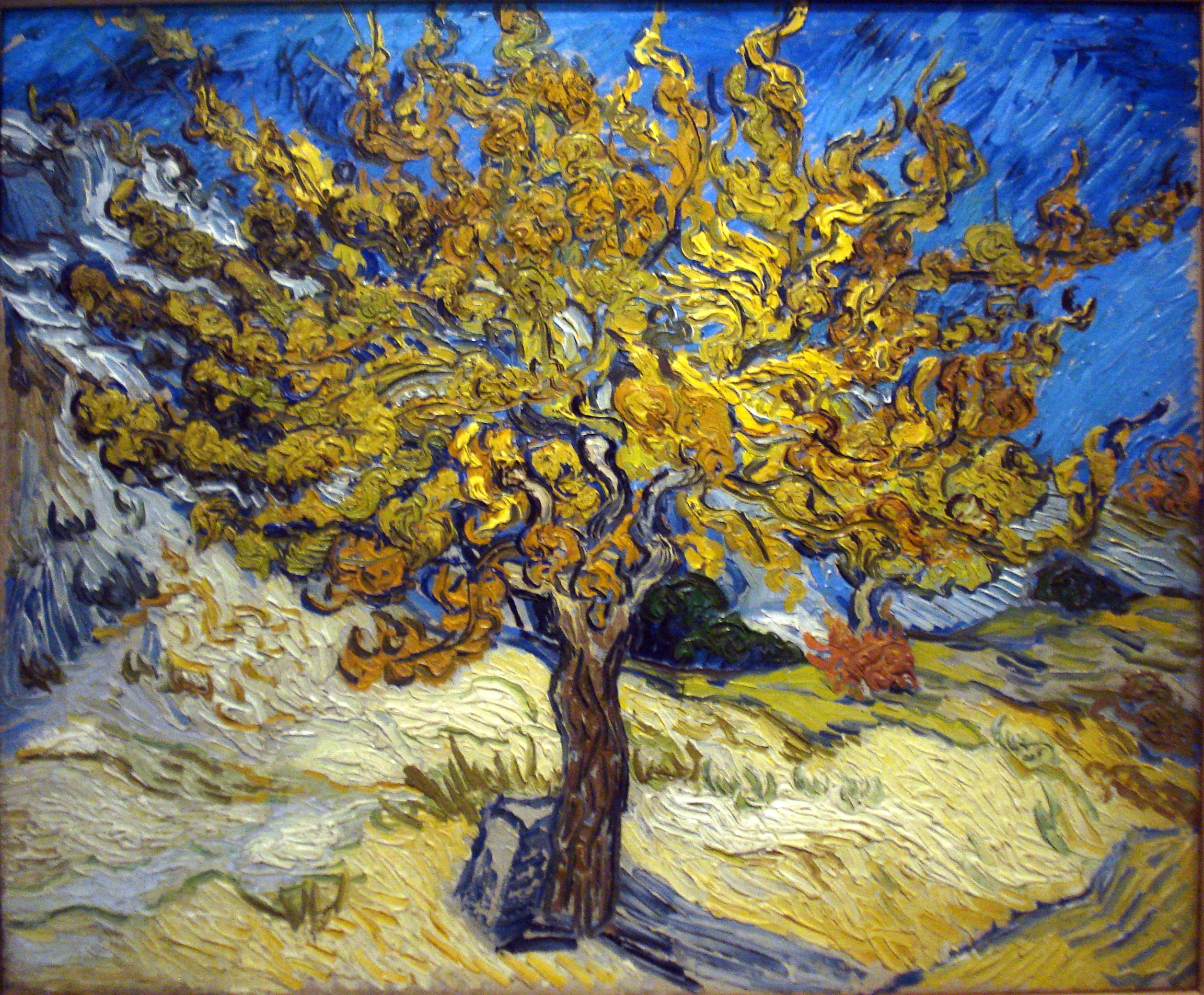
.jpg) Trees as a Significant Archetype for Human Life by Alex. A, 12th Grade Student
Trees as a Significant Archetype for Human Life by Alex. A, 12th Grade Student
%2C_oil_on_canvas%2C_70_x_99_cm%2C_Gemeentemuseum_Den_Haag.jpg)


.jpg)

